
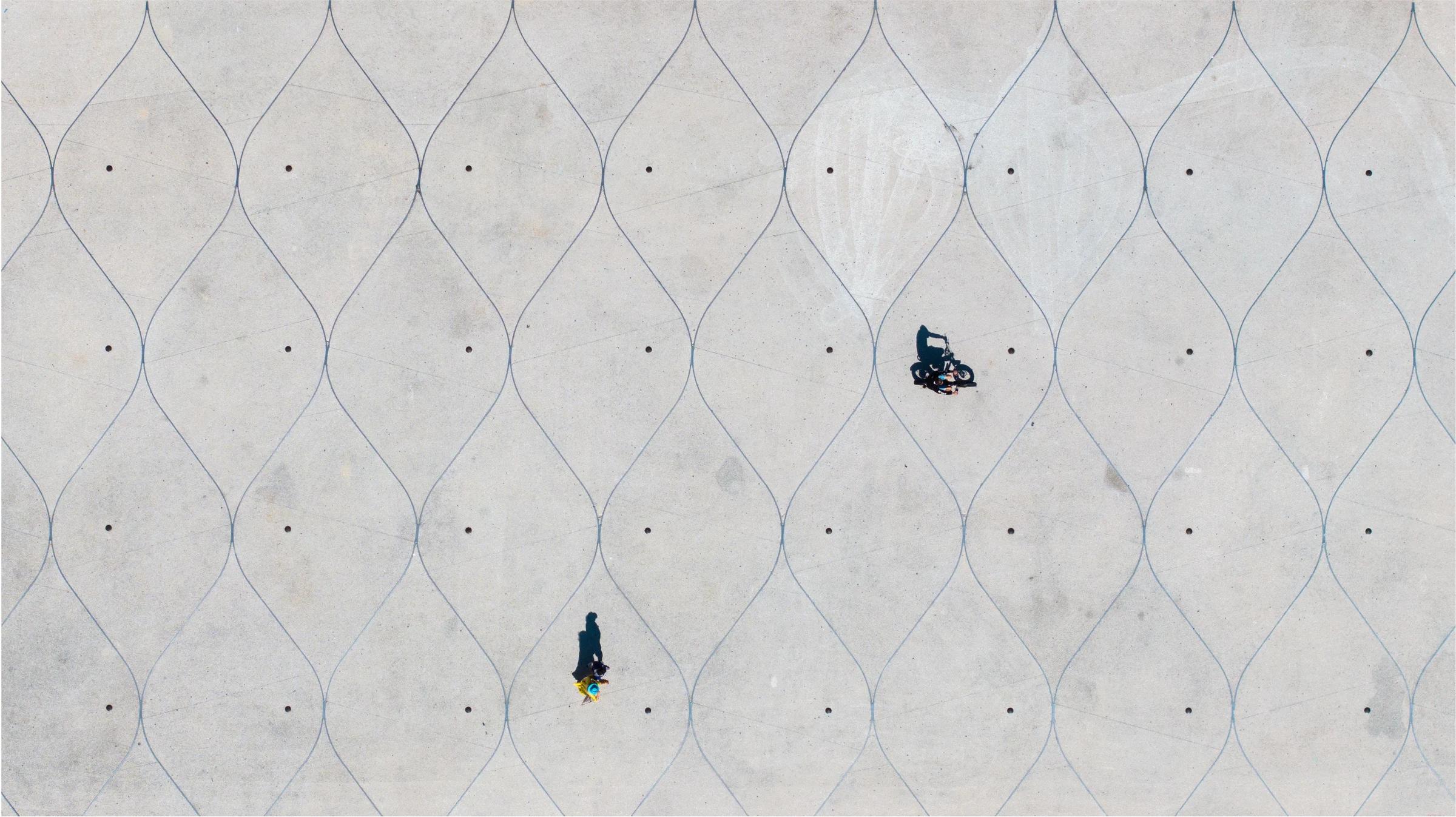
Paris Photo 2026
Booth F09
DANAE is pleased to present Jacopo Di Cera at Paris Photo, for the 2026 edition of the fair. The presentation, Human Traces, is curated by Marlène Corbun.
12–15 November 2026 · Booth F09
Grand Palais3 avenue du Général Eisenhower
75008 ParisReminder
Sospesi
2015 to present
Sospesi is a multimedia art project launched in 2015 that investigates Italian identity through a layered process of visual and social observation. The work unfolds across two distinct yet deeply interconnected dimensions: on the one hand, physical photography, printed on a large scale, which crystallizes time; on the other, digital works that transform the image into movement, flow, and a continuous sensory experience.
The project stems from an urgency to look: to portray Italy not through its polished surface, but through its deeper social and cultural fabric, observed from an unconventional perspective, the zenithal view.
Read the full text
Seen from above, every element of the landscape, bodies, buildings, streets, squares, coastlines, is flattened and brought onto the same visual plane. Within this apparent two-dimensional uniformity, a process of democratizing the gaze takes place: distances disappear, hierarchies dissolve, and what emerges is a new form of truth, shaped by relationships, tensions, and connections, between individuals, and between people and their surroundings. Space is no longer merely a container; it becomes an active protagonist in a collective narrative.
The physical works are dense, tactile, analytical images. Each print becomes an emotional map, a document of the deepest layers of Italian identity. The digital works, created from the same photographs, evolve into infinite video loops that challenge the logic of the instant and open the image to cyclical time. Here, the image does not simply show: it breathes, expands, regenerates, becoming an experience.
Sospesi is therefore a visual ecosystem in which photography and video enter into dialogue, complementing and amplifying one another. It offers a collective portrait of contemporary Italy, a country shaped by traditions that endure and forms that evolve, by bodies moving together and empty spaces that speak of absence.
A view from above that allows us to enter, perhaps for the first time, into our shared truths.
Within the photographic body of Sospesi, the artist constructs an emotional atlas of contemporary Italy, moving with an attentive and silent gaze through its traditions, collective rituals, and symbolic places. This is neither a tourist journey nor a collection of icons. Rather, it is a sustained and layered observation that, over the course of more than ten years, has sought to reveal the identity of a country through its suspended moments, charged with shared memory.
The artist photographs Italy in the time of its soul: during holidays, popular festivities, unhurried Sundays, moments when bodies surrender to a spontaneous choreography that reveals both the country’s character and its contradictions. Each image becomes a fresco of relationships, a poetic document of how we move, how we come together, and how we endure.
These images do not merely document: they transmit memory. Through a silent, perpendicular yet never detached gaze, the artist restores symbolic dignity to places and gestures. Every print, every scene, every detail becomes part of an affective geography of Italy, shaped by traditions that survive the passage of time and remind us of who we are, or who we are becoming.
Sospesi constructs an alternative narrative of the country through what endures, what is celebrated, and what is forgotten. The photographs thus become instruments of active memory, capable of connecting generations, territories, and identities through an artistic gesture rooted in radical empathy.
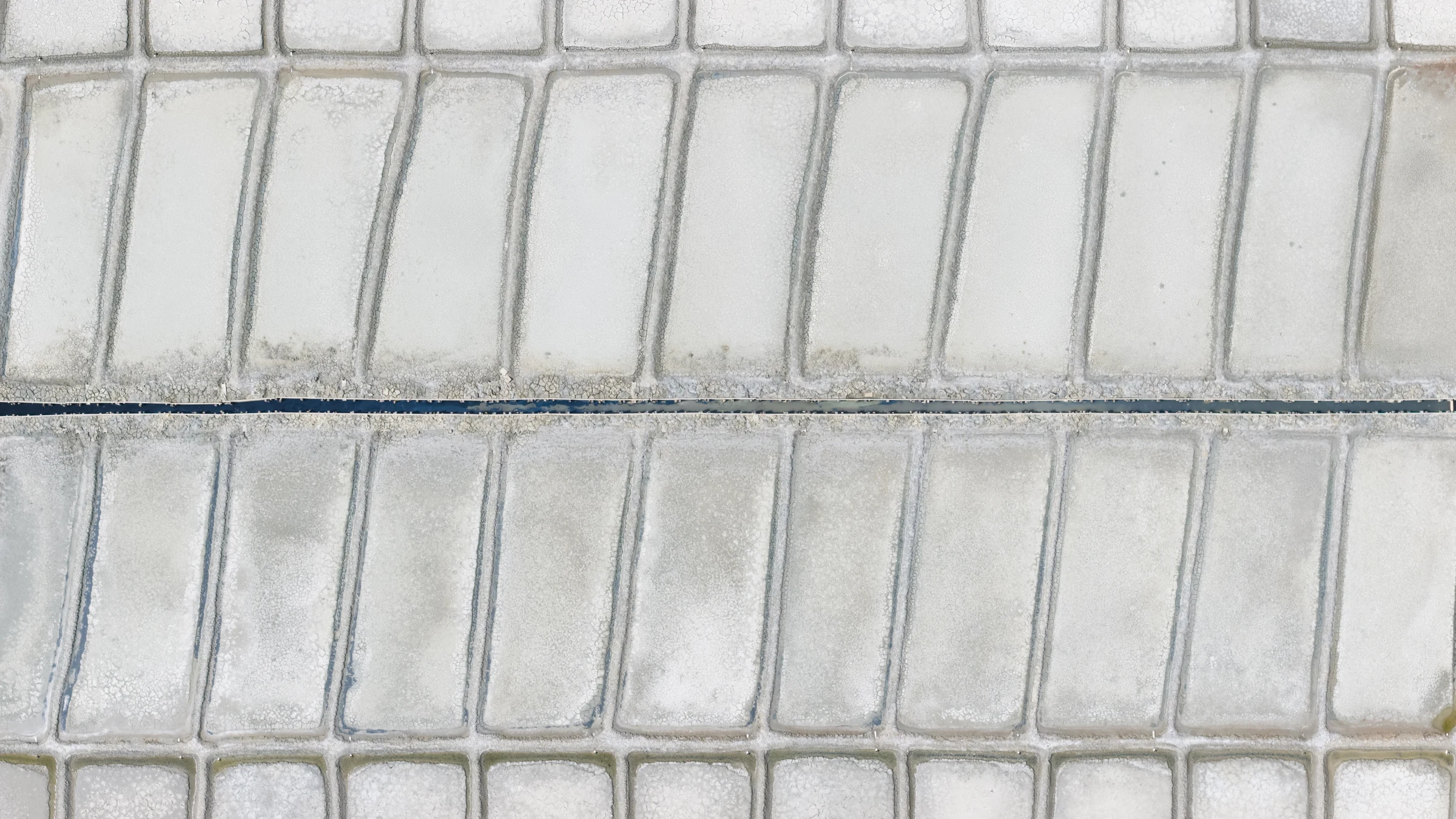
Saline, 2026
Jacopo Di Cera
Fine Art print on baryta paper, mounted on Dibond and Plexiglas
150 × 85 cm
Edition 1 of 6
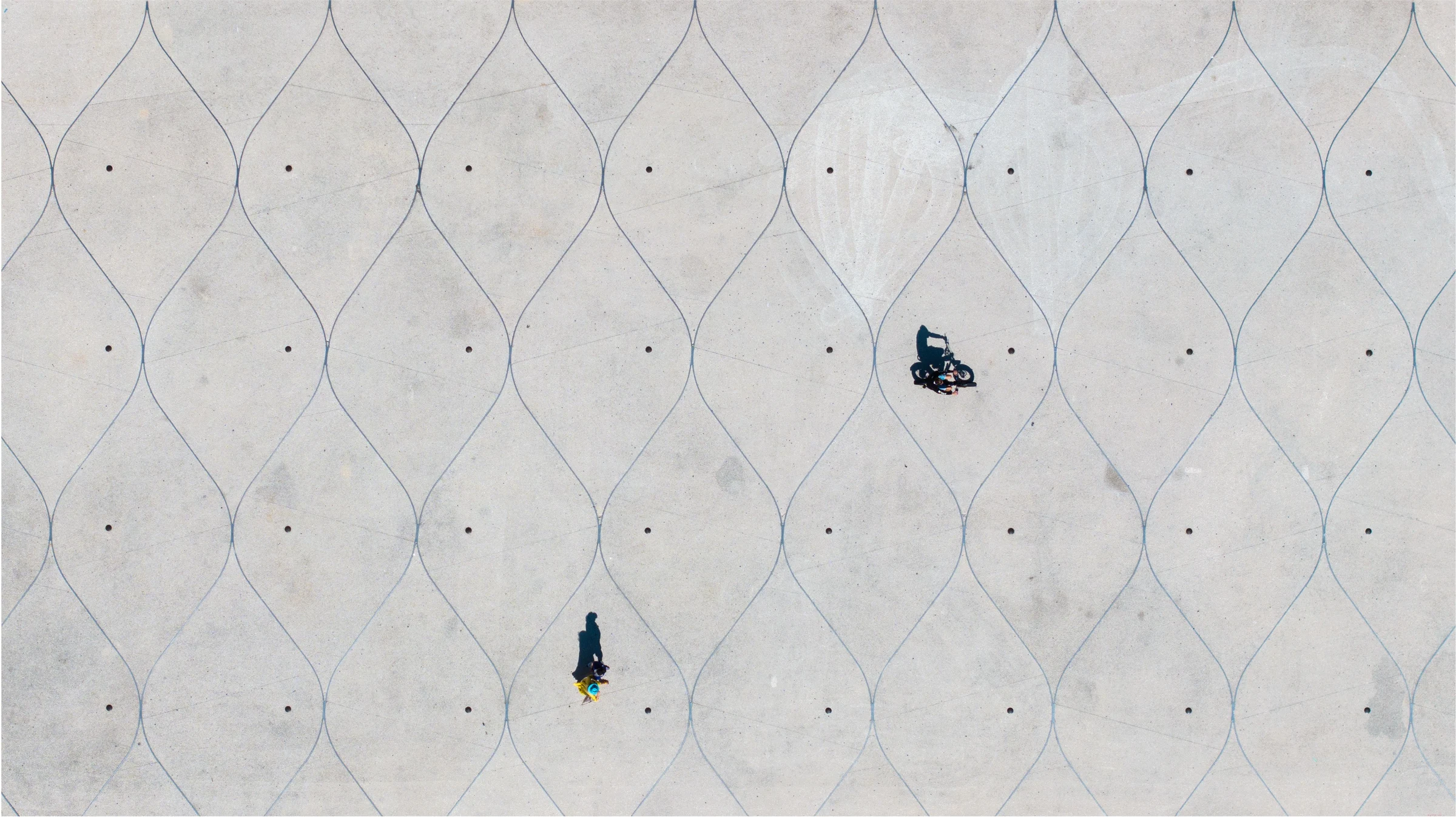
The Square (Antibes), 2024
Jacopo Di Cera
Fine Art print on baryta paper, mounted on Dibond and Plexiglas
150 × 85 cm
Edition 1 of 6
Dry Series
2022 · From Sospesi
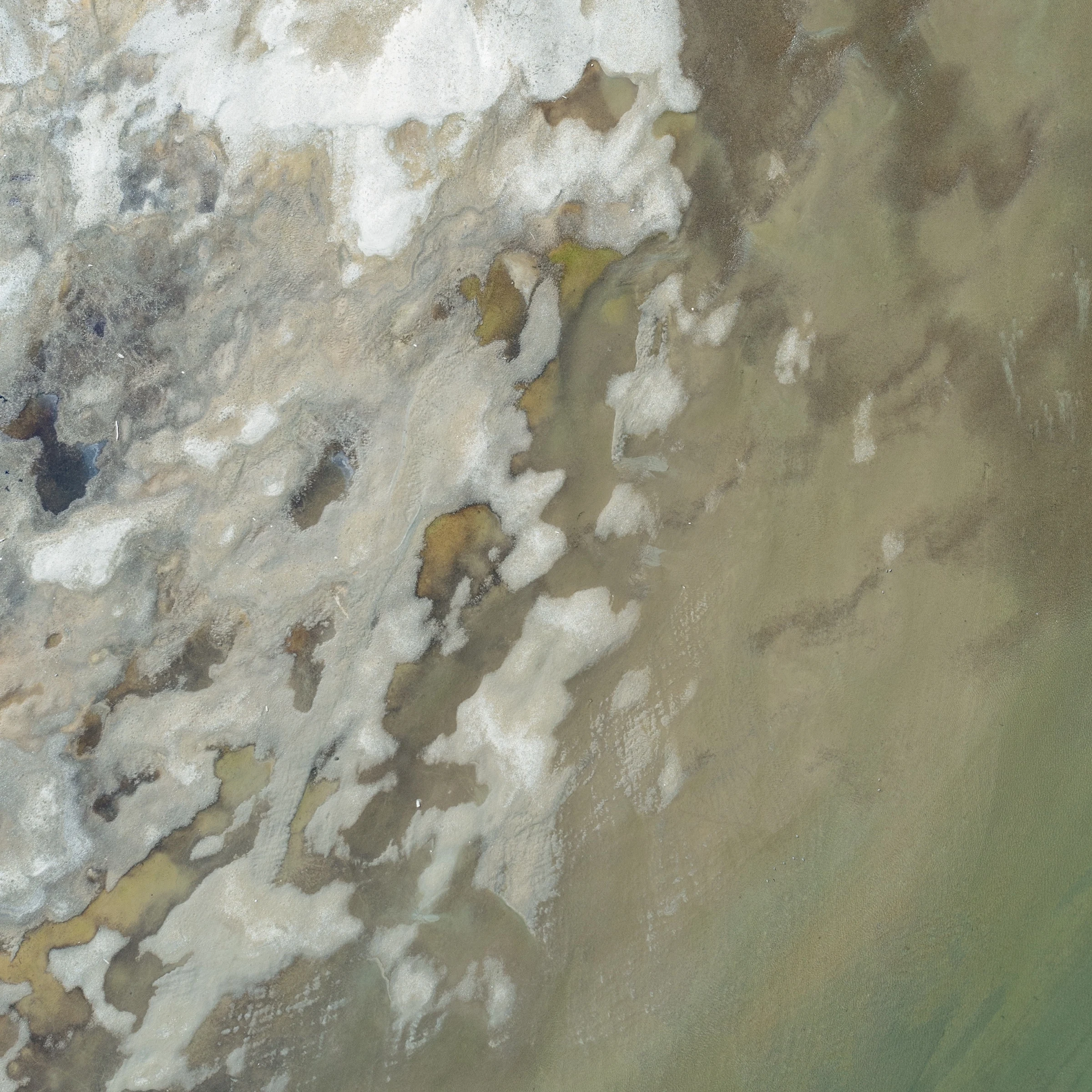
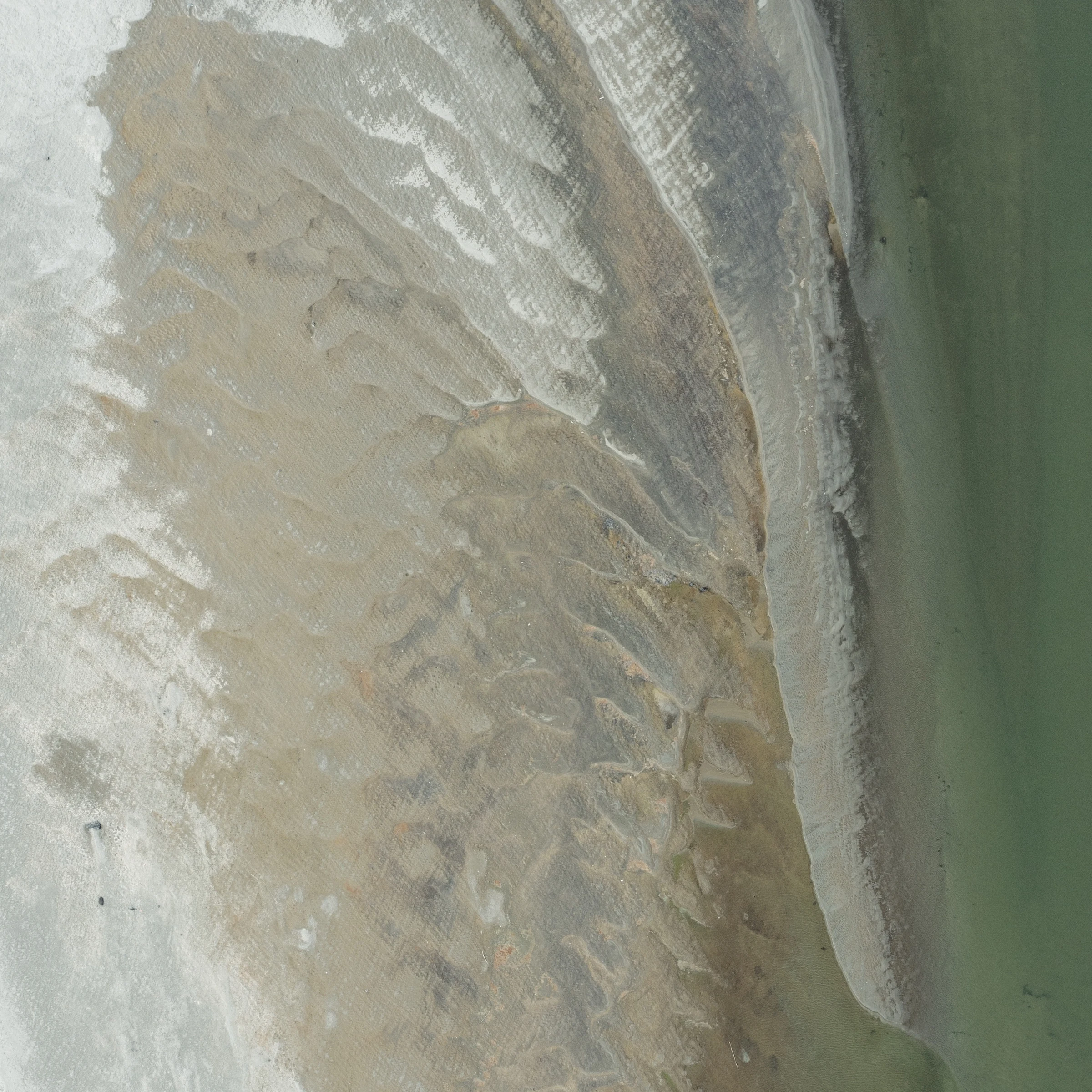
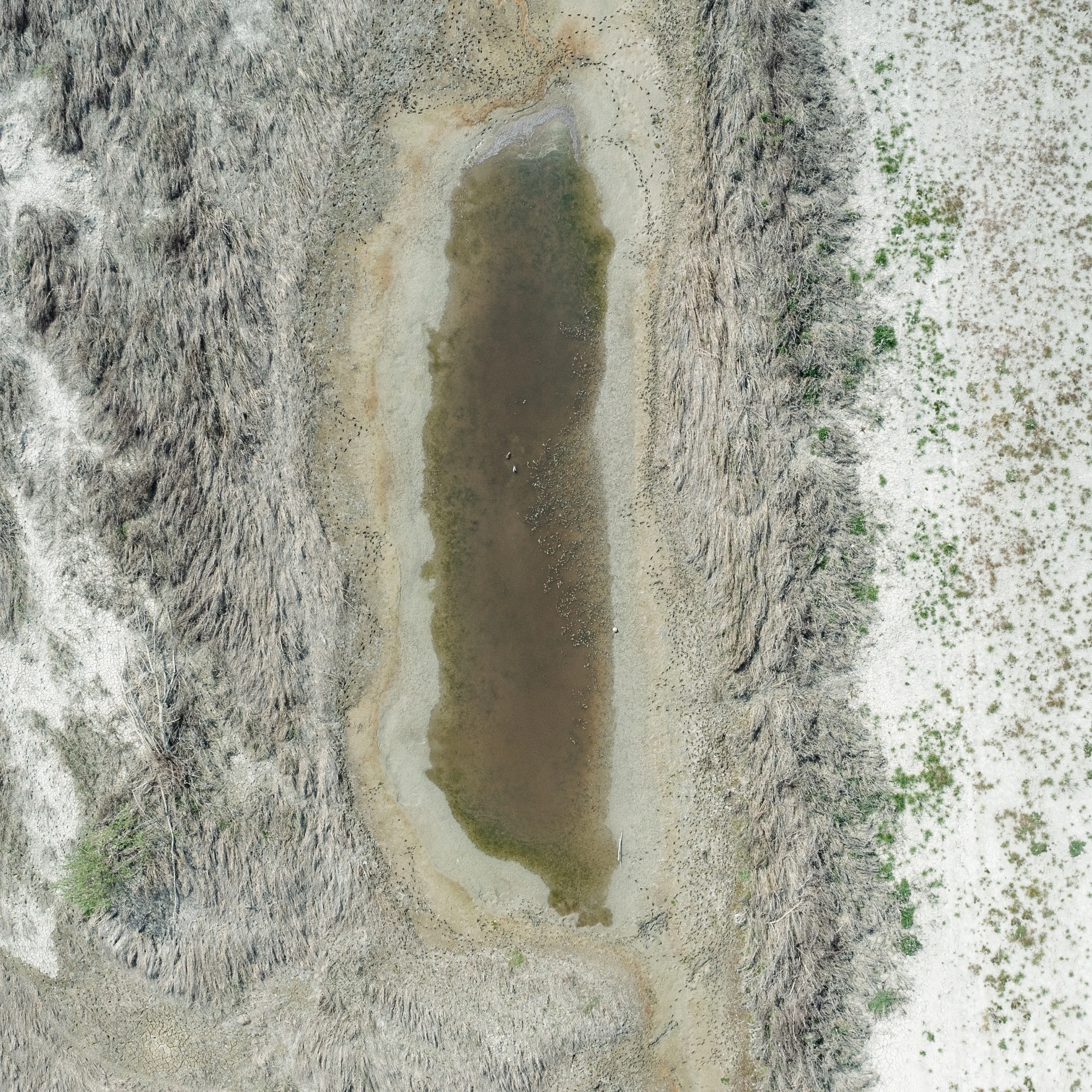
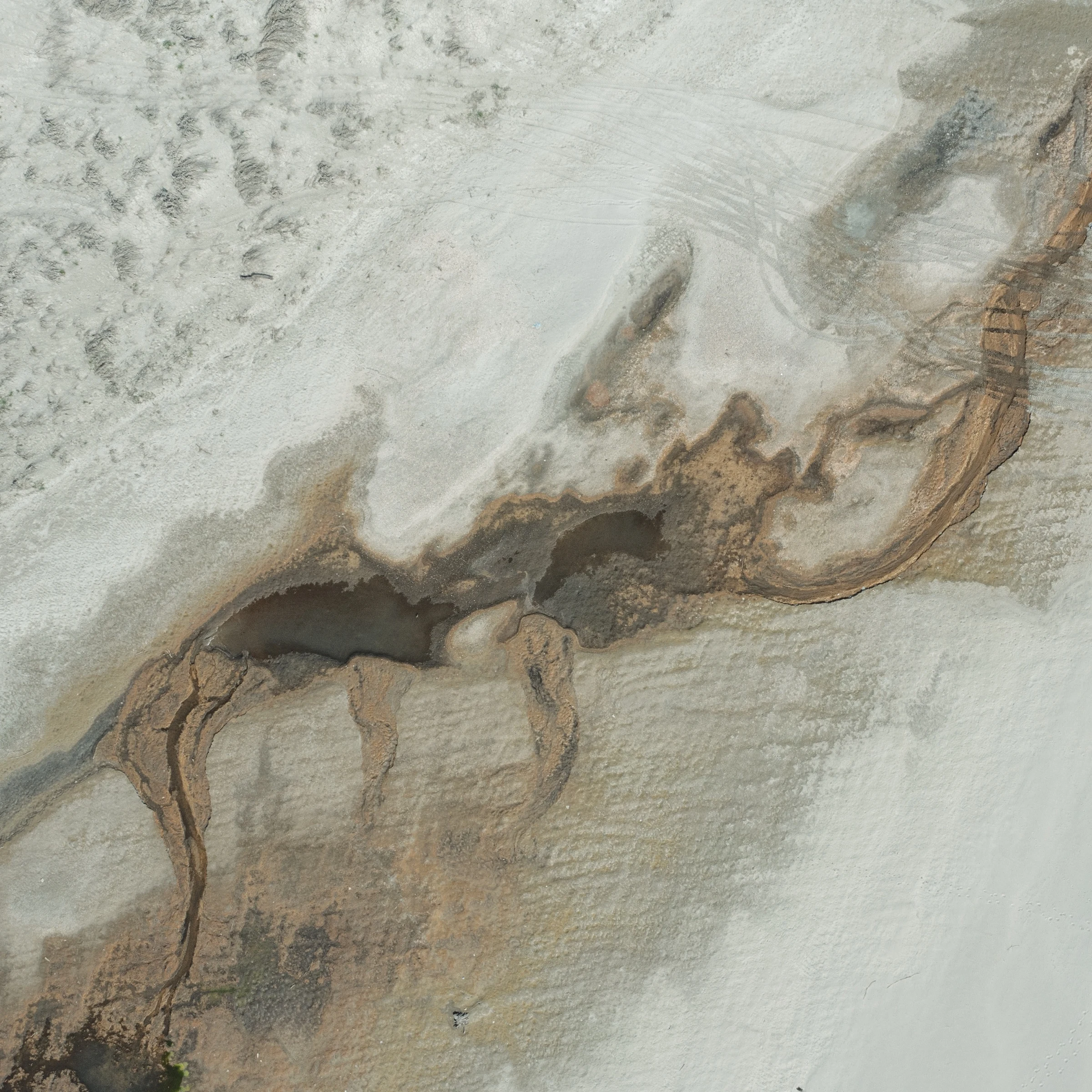
Dry Series is part of Jacopo Di Cera’s broader Sospesi project, an ongoing photographic research in which the artist observes the landscape from above, transforming natural and anthropized territories into suspended, almost abstract visual fields.
In this chapter, Di Cera focuses on the Po River during a period of severe drought. The lowering of the water level reveals areas of the riverbed that would normally remain submerged: sandbanks, sediments, traces of vegetation and human passage emerge as fragile, temporary geographies.
Read the full text
Seen from above, these surfaces lose their immediate scale and become compositions of lines, textures and shifting chromatic fields. Yet behind their formal beauty lies the evidence of an altered ecosystem.
Within Sospesi, Dry Series expands Di Cera’s reflection on climate change and on the increasingly unstable relationship between human presence and the natural environment. The drought is not represented as an event, but through its traces: absence, erosion, exposed surfaces and transformed morphologies become the visual language through which the landscape records its own vulnerability.
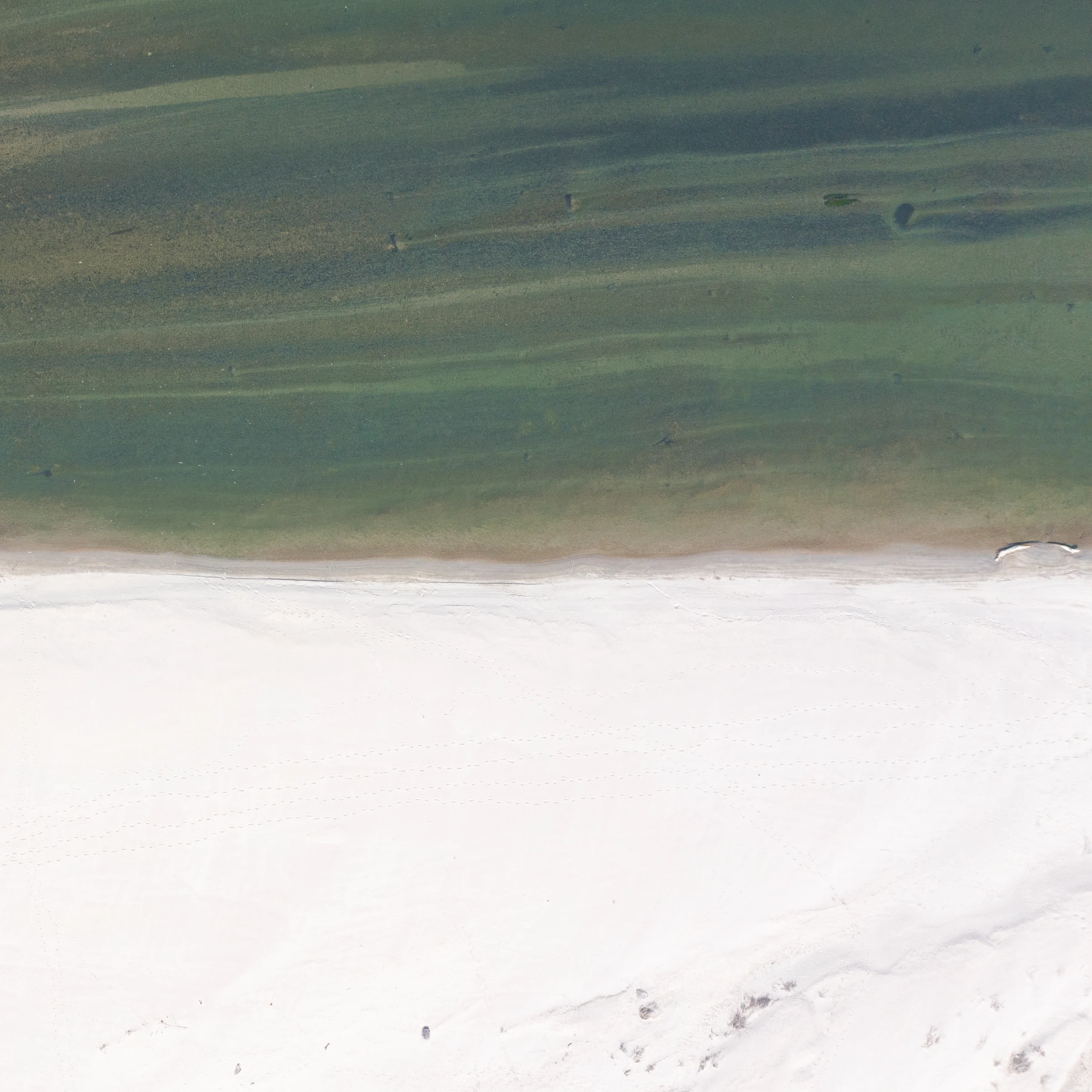
Dry #1, 2022
Jacopo Di Cera
Fine Art print on baryta paper, mounted on Dibond
45 × 45 cm
Edition 1 of 6
Dry #2, 2022
Jacopo Di Cera
Fine Art print on baryta paper, mounted on Dibond
45 × 45 cm
Edition 1 of 6
Dry #3, 2022
Jacopo Di Cera
Fine Art print on baryta paper, mounted on Dibond
45 × 45 cm
Edition 1 of 6
Dry #4, 2022
Jacopo Di Cera
Fine Art print on baryta paper, mounted on Dibond
45 × 45 cm
Edition 1 of 6
Dry #5, 2022
Jacopo Di Cera
Fine Art print on baryta paper, mounted on Dibond
45 × 45 cm
Edition 1 of 6
Ciclica
2026 · Curatorial text by Rebecca Pedrazzi
With Ciclica, Jacopo Di Cera constructs a visual cosmogony centered on the vulnerability of living systems and the increasingly evident fracture between natural order and human intervention. The work unfolds as a symbolic narrative in three acts, birth, life, and death, in which Gaia, the primordial goddess of Earth in Greek mythology, becomes both an archetype of the human condition and an allegory of our ecological present. Emerging here in minor keys is a reflection on one of the most radical urgencies of our time.
As a generative origin and matrix of the material world, Gaia is evoked as a principle of interconnection between the elements of earth, water, and sea. It is no coincidence that she emerges from the sea, the archetypal threshold of life and its manifestation. At the core of this emergence lies the central idea of the work: that every existence is inscribed within a grammar of cyclicality.
Read the full text
Gaia is embodied by performer Lidia Carew, whose symbolic body moves through the three narrative thresholds of the installation. At the heart of the work, her dance unfolds between sea and land as an image of primordial harmony: an essential choreography makes perceptible the organic continuity between living beings and their environment.
Across the twenty central screens, the dance is intersected by videos created by the artist, evoking the causes and effects of climate change: drought, ecosystem loss, and the increasing extremity of weather events. The visual apparatus becomes both a conceptual and visual interference: environmental collapse is inscribed into Gaia’s dance, transforming her into the image of a time in which natural harmony survives, yet is already wounded.
The journey concludes with Gaia’s death, not as an end, but as a return to matter. It is precisely within this continuity between birth, life, and dissolution that Ciclica poses its most urgent question: what happens when the natural cycle is disrupted by human action?
The installation itself participates in this reflection: through the use of upcycled screens, technological matter becomes an ethical choice. Through a visual grammar charged with symbolic intensity, built around the zenithal perspective and a meticulous attention to form, light, and shadow as conceptual extensions of the body, Di Cera translates climate change into an aesthetic experience and a critical interrogation of the present.
Ciclica does not simply tell the story of Gaia. It tells the story of what we are doing to her body, and, inevitably, to our own.
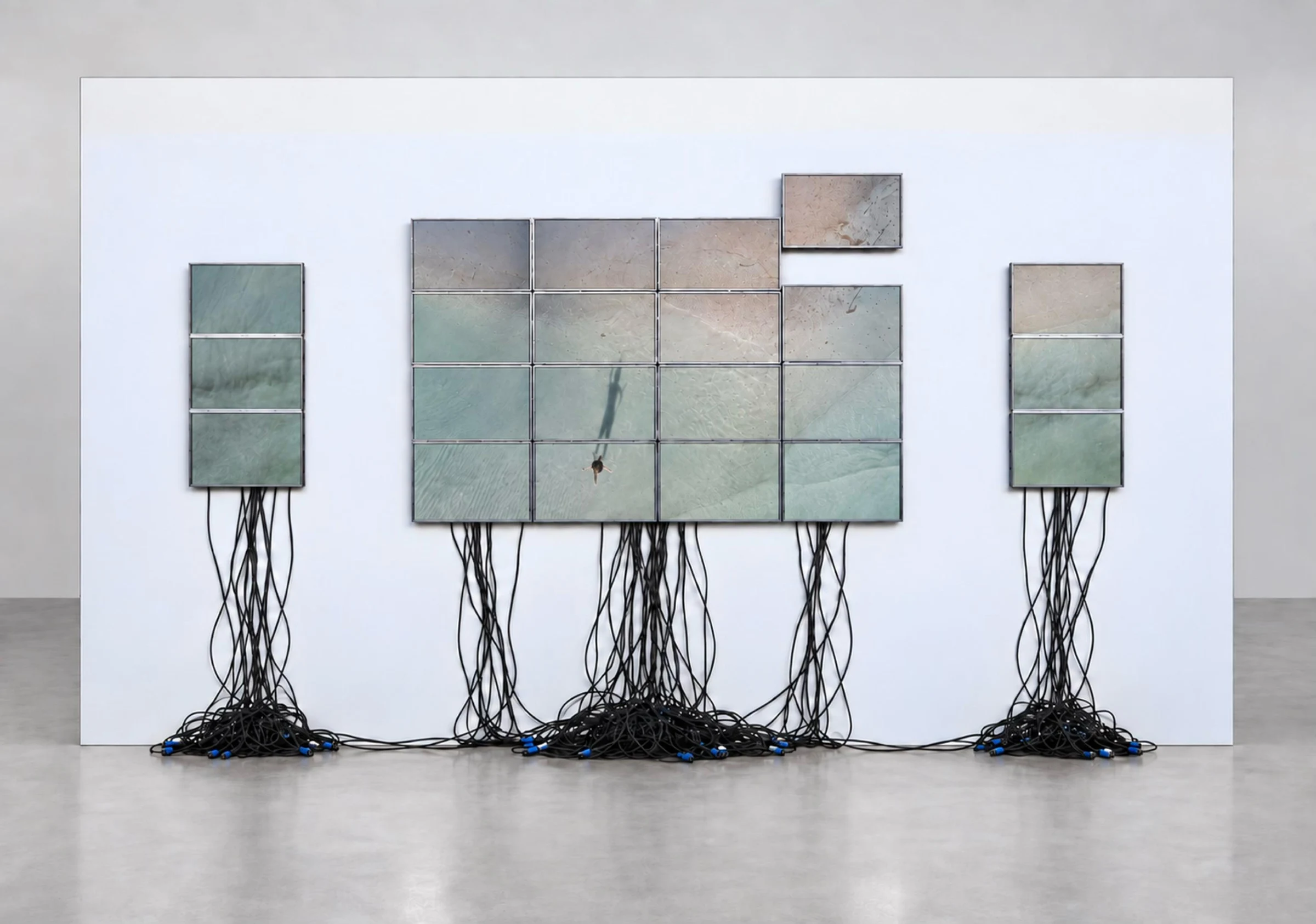
Ciclica, 2026
Jacopo Di Cera
Multimedia installation composed of 22 upcycled screens
Choreographic performance by Lidia Carew
Original music by MKDB
Installation by Tim Maiwald, So Much (Trash) Studio
400 × 275 × 50 cm